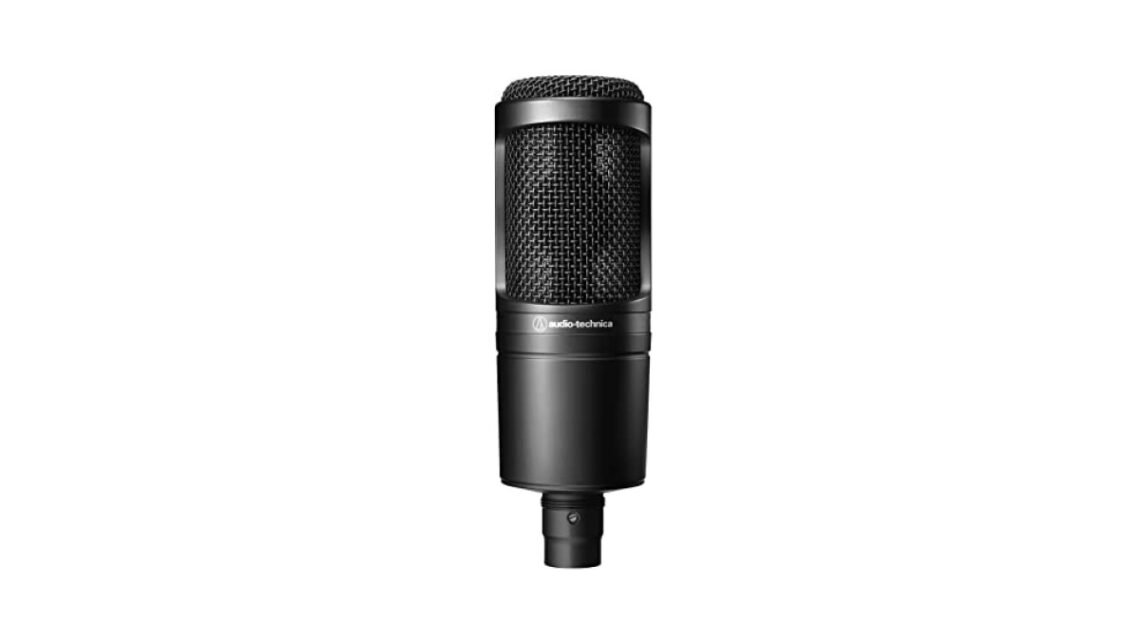
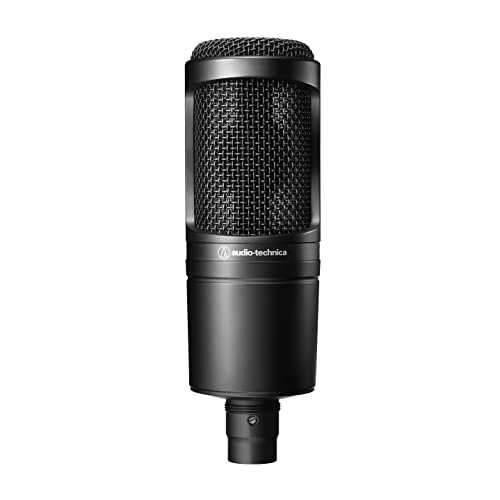
The Audio-Technica AT2020 review is worth a close look, this condenser microphone has gained a reputation among content creators for its clear sound reproduction and reliability in both studio and gaming environments.
Audio
Best for: Perfect for project and home studios
- Excellent sound quality for price
- Great for vocal recording
- Handles high SPL easily
- Cardioid pattern limits versatility
- No onboard controls or switches
One feature that really stands out is the AT2020’s ability to handle high sound pressure levels (SPL) without distortion, which is crucial during intense gaming sessions where every sound counts. However, if you’re looking for a USB microphone or opt for a plug-and-play model, you might find this XLR mic a bit less convenient.
That being said, Audio enthusiasts will appreciate the quality and control it offers.
| Best for | Recording, gaming, and streaming |
| Not ideal for | Those seeking USB plug-and-play convenience |
| Standout feature | Excellent sound quality for price |
| Value | Mid-range |
| Bottom line | A solid choice for serious audio quality at a reasonable price. |
Things I like
- Exceptional audio clarity and depth.
- Great for vocal recording and streaming applications.
- Handles high SPL without distortion.
- Sturdy and durable construction.
Things I’d improve
- Requires an interface or mixer for connection.
- Not a USB mic; may not be as convenient for casual users.
- A heavier setup is needed for transport due to XLR cable use.
Overview
| Brand | Audio-Technica |
| Type | Condenser Microphone |
| Finish/Color | Black |
| Material | Metal |
| Warranty | 1 year |
| Mounting/Format | Stand mount |
The AT2020 fits squarely within the mid-range condenser microphone category, ideal for both amateur and semi-professional use. It competes against higher-end models but manages to maintain a strong standing due to its impressive audio performance and build quality.
Design & Build
| Material | Metal |
| Weight | 1.3 lbs |
| Dimensions | 6.69″ x 2.06″ x 2.05″ |
The build quality of the AT2020 is impressive, with a solid metal construction that feels robust in hand. This durability is vital considering the rigors of transportation between gigs or streams. The shock mount is also effective in reducing unwanted vibrations. However, its traditional design feels slightly dated compared to newer models with sleek aesthetics.
But don’t let that distract you from the sound; this microphone prioritizes functionality over flashiness.
While lightweight and not overly bulky, I found it essential to use a decent microphone stand or boom arm, as positioning can impact audio quality significantly. Choosing the right mount allows for proper angling and reduces handling noise during gaming or recording sessions.
Performance
In terms of performance, the AT2020 delivers clean and clear audio across various sound levels. The cardioid pickup pattern effectively isolates your voice from background noise, making it an excellent choice for gaming environments where background chatter or game audio can be distracting. The frequency response of 20 Hz to 20 kHz captures a broad range, ensuring that both low rumbles and high tones are represented faithfully.
| Frequency Response | 20 Hz – 20 kHz |
| Sensitivity | -37 dB |
| Impedance | 100 ohms |
| Maximum SPL | 144 dB |
Many users frequently remark on how exceptional vocals sound through the AT2020, and I concur; dialogue clarity is superb, making it ideal for game streaming. This clarity is achieved without introducing excessive noise or distortion, something that often plagues lower-end microphones.
My experience indicates that the AT2020 balances punchy highs with warm mids and clear lows, especially during quiet moments when details matter most in audio feedback.
How It Handles Everyday Situations
- In a crowded gaming space, the cardioid pattern effectively minimizes background noise, allowing for focused voice clarity.
- During long streaming sessions, the microphone remains cool, with minimal handling noise, thanks to its solid build.
- In environments with various sound levels, the AT2020’s handling of SPL ensures all audio nuances are captured without distortion.
- For character voiceovers, the mic lets nuances shine, reinforcing the emotional delivery of performance artistry.
Ease of Use & Installation
Using the AT2020 is relatively straightforward, though some setup is involved, especially since it requires an audio interface or mixer to connect to your computer. This added step might intimidate those looking for out-of-the-box options. Still, once you’re set up, daily use is smooth. I appreciate its solid performance without any unnecessary settings to worry about, allowing you to focus on your audio quality.
Cleaning this microphone is simple; just a gentle wipe with a soft cloth does the trick. However, its metal construction can attract dust, so I recommend storing it in a dedicated carry case to maintain its pristine appearance. Here’s what you can expect in the box:
- AT2020 Microphone
- Stand Mount
- Storage Pouch
How It Compares
| Option | Best for | Key difference |
| Blue Yeti | Streamers wanting USB convenience | USB connection and multiple pickup patterns |
| Shure SM7B | Professional-level vocal recording | Higher price point and even better sound isolation |
| Rode NT1-A | Quiet recording environments | Lower self-noise and higher sensitivity |
Among these options, the Audio-Technica AT2020 shines for those prioritizing sound quality at a competitive price point. Its performance holds up well against both the more expensive Shure model and versatile Blue Yeti, particularly in environments with variable sound levels.
Who Should Buy This
Great fit
- Gamers needing high-quality voice clarity.
- Content creators prioritizing audio detail.
- Podcasters looking for a reliable mic at a reasonable price.
Look elsewhere if
- You seek plug-and-play simplicity without needing additional gear.
- Your setup is highly mobile and needs ease of transport.
- You require multiple pickup patterns for various recording uses.
Final Verdict
For those prioritizing audio quality, the Audio-Technica AT2020 is a solid investment. However, if you prefer the convenience of a USB microphone, consider the Blue Yeti, which is great for plug-and-play setups. On the other hand, the Shure MV7 offers excellent versatility for both podcasting and streaming with its hybrid USB/XLR connectivity.
Audio
Best for: Perfect for project and home studios
- Excellent sound quality for price
- Great for vocal recording
- Handles high SPL easily
- Cardioid pattern limits versatility
- No onboard controls or switches
We cover best gaming in more depth separately.
Frequently Asked Questions
Is the Audio-Technica AT2020 good for gaming?
Yes, the Audio-Technica AT2020 is suitable for gaming due to its clear sound capture and cardioid pickup pattern, which helps to isolate your voice from background noise. This makes it a solid choice for communicating with teammates and providing a high-quality audio experience.
How does the AT2020 compare to other microphones?
The AT2020 is often praised for its professional audio quality at an entry-level price point. Compared to other microphones in its class, it generally offers superior clarity and detail, which makes it a popular choice among content creators and musicians alike.
What are common problems with the AT2020?
Some users report that the AT2020 can pick up unwanted background noise due to its sensitive nature, making it less ideal for noisy environments. Additionally, without a good quality audio interface or preamp, users may find they need to boost the gain, which can lead to hiss.
Can the AT2020 be used for streaming?
Absolutely, the Audio-Technica AT2020 can be effectively used for streaming. Its high audio quality will help deliver a professional sound, enhancing the overall experience for your audience.
Why choose AT2020 for podcasting?
Choosing the AT2020 for podcasting is ideal due to its ability to capture clear and natural vocal tones, which is essential for engaging audio content. Its durable build and professional sound quality also ensure that it can handle regular use in a podcasting setup.